How to Find the Top Playground Equipment Supplier?
Finding a reliable playground equipment supplier requires more than comparing catalogs or chasing the lowest price. The right partner should demonstrate safety knowledge, manufacturing experience, material transparency, and dependable after-sales support. The U.S. Consumer Product Safety Commission reports approximately 200,000 emergency-department-treated injuries linked to public playground equipment each year. That figure changes the buying question. It is not simply, “Who offers the brightest slide?”
A serious supplier should explain compliance with standards such as ASTM F1487 and EN 1176. Ask for test records, installation guidance, maintenance schedules, warranty terms, and references from similar projects. The National Program for Playground Safety also emphasizes regular inspection, protective surfacing, and age-appropriate design. These details matter in a schoolyard, where loose hardware, exposed foundations, or compacted surfacing can quickly become visible risks. Dr. Joe L. Frost, a respected playground researcher, wrote, “Play is the business of childhood.” A supplier should understand that statement beyond marketing language. Equipment must support active, inclusive, and meaningful play.
The Top Playground supplier may not be the largest company. It may be the one that answers difficult questions clearly. Look for documented factory controls, trained installers, accessible replacement parts, and realistic delivery promises. Industry market reports often present attractive growth figures, but market size does not prove product quality. That deserves reflection. A polished website can still hide weak service. Compare evidence, not slogans. Visit an installed site when possible, speak with its operators, and inspect how equipment performs after months of use. The strongest choice combines verified safety practices, thoughtful design, durable materials, and honest communication. That combination protects children, budgets, and the project’s long-term reputation.
Define Safety Criteria: ASTM F1487, EN 1176, and CPSC Guidelines
How to Find the Top Playground Equipment Supplier?
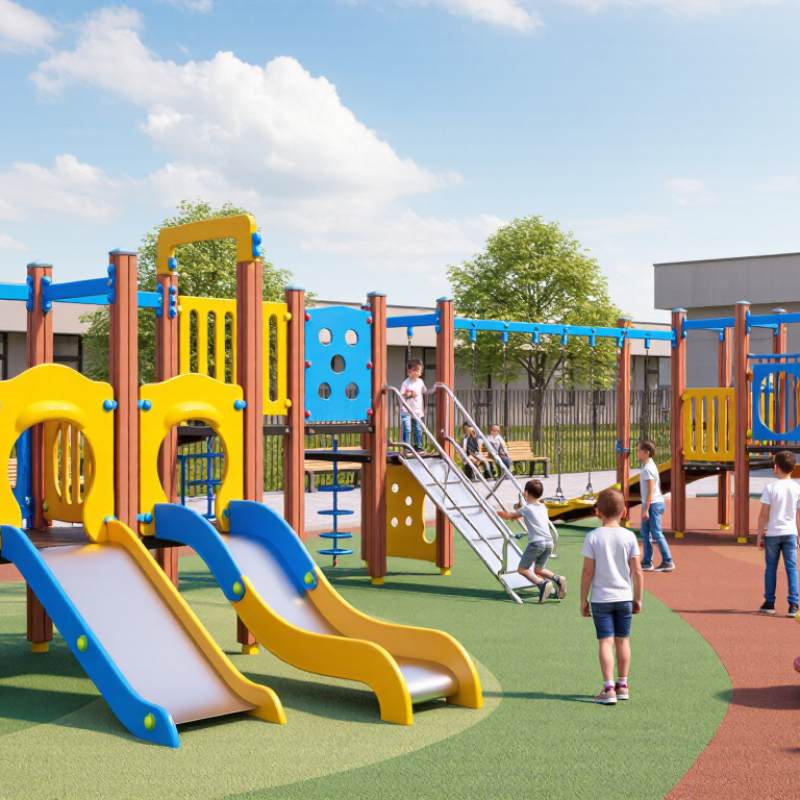
The safety file should be the first inspection point. ASTM F1487 defines performance requirements for public playground equipment. Request the exact edition used for testing. EN 1176 addresses design, installation, surfacing, and entrapment risks. These standards are not interchangeable. A supplier serving different markets should explain each difference clearly. Do not accept a generic certificate. Ask for test reports, installation drawings, maintenance instructions, and material specifications. Check whether every report identifies the tested model, dimensions, and revision date.
Data supports this caution. The U.S. Consumer Product Safety Commission’s Public Playground Safety Handbook reports about 200,000 emergency-department-treated playground injuries annually among children. CPSC guidance also identifies falls as a leading injury source. During a site review, measure the highest fall height and verify protective surfacing beneath it. Look for exposed bolts, hard edges, and openings that could trap fingers or limbs. Ask who checks anchoring after installation and how often inspections occur. Paperwork can mislead. A complete-looking file may still omit surfacing depth or drainage details. That is an uncomfortable gap, but it deserves attention. Use CPSC guidance alongside ASTM F1487 or EN 1176, then require evidence that the installed playground matches the tested design.
Prioritize Fall Protection: CPSC Reports Falls Cause 79% of Injuries
How to Find the Top Playground Equipment Supplier?
A reliable supplier should treat fall protection as the central design issue. CPSC reports that falls cause 79% of playground injuries. That figure deserves attention. It changes how buyers should compare equipment, prices, and layouts.
Look for impact-absorbing surfacing beneath every elevated platform. Engineered wood fiber, rubber surfacing, or suitable loose-fill materials can reduce injury severity. Ask for tested fall-height ratings and installation instructions. Confirm that platforms include guardrails, barriers, and secure handholds. Check whether equipment separates younger and older children. A supplier should also provide inspection schedules, maintenance records, and clear replacement guidance. Experience matters here. A polished catalogue cannot replace practical safety knowledge.
Tips: Request a site-specific layout, not only product images. Stand beside the proposed equipment and imagine a child falling from each platform. Check corners, gaps, bolts, and swing clearances. Ask who installs the equipment and how training is documented. Review relevant playground safety standards for your location. Photos can hide poor drainage. They often do. During a site visit, inspect the surface after rain and look for exposed foundations. I would also ask for references from facilities with similar traffic levels. One detail is easy to miss: safe equipment can become hazardous when maintenance is delayed. A dependable supplier explains that risk honestly and welcomes difficult questions.
Assess Materials and Durability Through IPEMA-Certified Product Testing
How to Find the Top Playground Equipment Supplier?
A reliable supplier should provide clear evidence of material quality and product durability. IPEMA-certified product testing offers useful independent verification against recognized playground safety standards. It can cover equipment components, surfacing, or both, depending on the certification scope. Ask for current certificates, test references, and the exact product models included. Do not accept a general statement that every item is certified.
Inspect the materials beyond the certificate. Look for corrosion-resistant metal, UV-stable plastic, smooth welds, sealed edges, and tamper-resistant fasteners. Request details about load testing, impact attenuation, and repeated-use performance. A strong supplier should explain how equipment handles wet mornings, strong sunlight, and hundreds of daily climbs. Certification is valuable, but it does not replace proper installation or regular inspection. It is easy to overvalue paperwork. The playground still needs careful judgment.
Tips:
Compare certificates with the supplier’s technical drawings. Check whether the tested model matches the proposed unit. Ask about replacement parts and inspection support. Visit an installed playground if possible, and examine faded surfaces, loose bolts, drainage, and worn protective areas. Small defects can reveal larger maintenance weaknesses. Also, request written care instructions before purchasing. Reliable answers should be specific, consistent, and easy to verify.
Compare Suppliers Using Lifecycle Costs, Warranties, and Service Records
Finding a playground equipment supplier requires more than comparing catalog prices. The real test is what installation costs over its usable life. Ask for a lifecycle estimate covering equipment, surfacing, freight, installation, inspections, repairs, and replacement parts. A cheaper structure may need repainting sooner or use unusual fittings. That creates delays. Request five-, ten-, and fifteen-year cost views, even when figures remain estimates. Clear assumptions make those estimates useful.
Read warranty terms line by line. Check coverage periods for frames, coatings, moving parts, hardware, and surfacing. Confirm who pays for labor, shipping, removal, and reinstallation. A long warranty means little when exclusions are vague. Ask how claims are logged and how quickly damaged parts are supplied. Keep written answers with your project records. This is where practical experience matters. A missing bolt or cracked panel can close a popular play area for days.
Service records reveal more than polished sales material. Request anonymized repair histories, inspection schedules, response times, and references from sites with similar traffic and weather. Speak with facility managers, not only sales contacts. Notice whether records show recurring failures and honest corrective action. I once treated a low bid as a success, then underestimated maintenance labor. That mistake changed my comparison sheet. Numbers help, but they are incomplete. Include staff time, downtime, spare-part storage, and future accessibility upgrades. Check whether service performance stays consistent after installation, not only during the quote.
How to Find the Top Playground Equipment Supplier?
Compare suppliers using lifecycle costs, warranties, and service records.
Supplier Profile 1
15-year lifecycle cost: $86,000. Structural warranty: 15 years. Typical service response: 2 business days.
Supplier Profile 2
15-year lifecycle cost: $97,000. Structural warranty: 10 years. Typical service response: 5 business days.
Supplier Profile 3
15-year lifecycle cost: $85,000. Structural warranty: 12 years. Typical service response: 1 business day.
The comparison uses a 15-year planning model in U.S. dollars, combining equipment purchase, installation, scheduled maintenance, and repair allowances. A lower lifecycle cost should be evaluated together with warranty length and documented service performance.
 +86-13901441113

 CONTACT NUMBER
 CONTACT NUMBER