Leave Your Message

What Is the Best Type of Outdoor Play Set?

Choosing the best outdoor play set depends on your children, available space, budget, and daily routine. A large structure may look exciting, but it can overwhelm a small yard. A compact set may fit beautifully, yet offer fewer challenges as children grow.

Outdoor Play Sets usually include swings, slides, climbing features, or imaginative play areas. Each design creates a different experience. Wooden sets often feel natural and sturdy, while metal frames can provide a cleaner, lighter appearance. Plastic models may suit younger children and smaller spaces. The best material depends on maintenance, weather exposure, and expected use.

Safety deserves more attention than appearance. Look for strong connections, stable anchors, smooth surfaces, and age-appropriate equipment. Check the manufacturer’s instructions carefully. Measure the play zone, including the recommended fall area around every feature. Soft, well-maintained ground also matters.

Think about tomorrow.

A set should challenge children without creating unnecessary risk. It should encourage movement, cooperation, and independent play. However, no play set is perfect. A climbing wall may inspire confidence but require closer supervision. A swing set may encourage active play but demand regular hardware checks. These trade-offs are easy to overlook when photographs make every product appear impressive.

This guide compares common Outdoor Play Sets by design, materials, safety considerations, durability, and value. It also considers real household concerns, such as cleaning, seasonal weather, and changing interests. The final recommendation should reflect evidence, careful inspection, and your family’s specific needs—not simply the most attractive model.
What Is the Best Type of Outdoor Play Set?

Types of Outdoor Play Sets and Their Main Features

What Is the Best Type of Outdoor Play Set?

Outdoor play sets differ in movement, space, and supervision needs. Swing sets support rhythm, balance, and controlled risk. Look for adjustable seats, strong suspension points, and impact-absorbing ground cover.

Climbers develop grip strength and coordination. Their platforms need secure rails and openings too small for a child’s head. Slides add speed and excitement, but their exits should be clear and cool to touch.

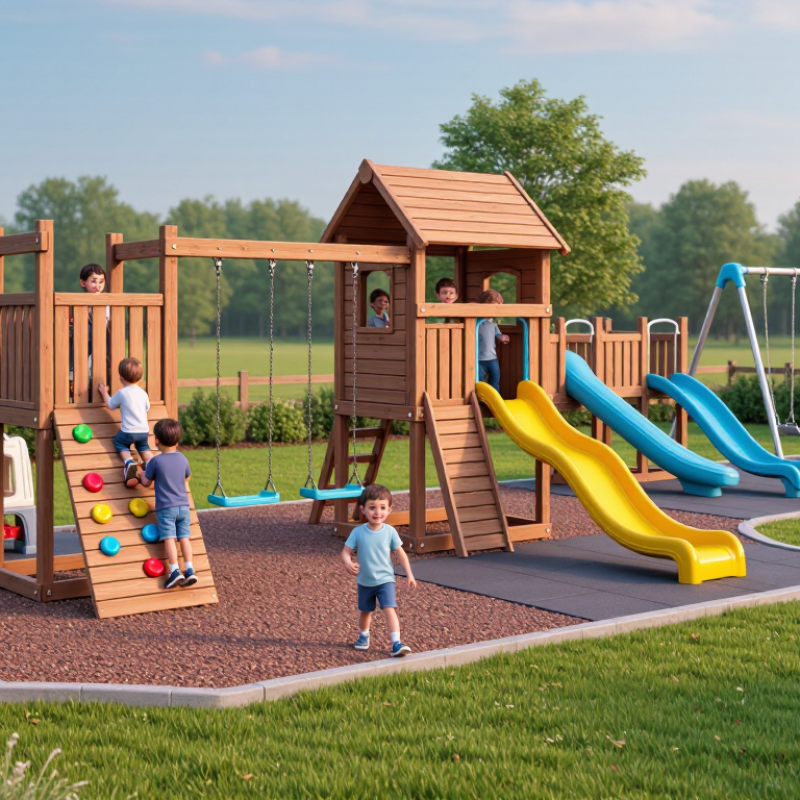
Combination sets join swings, climbers, slides, and sometimes climbing walls. They suit families with several children because activities stay varied. However, more components also create more inspection points. Check bolts, wood surfaces, ropes, and anchor stability each month.

The U.S. Consumer Product Safety Commission reports that about 200,000 children receive emergency treatment for playground injuries each year. Falls cause roughly four-fifths of these injuries, according to its Public Playground Safety Handbook.

Balance beams, stepping pods, and nature-based play features offer quieter challenges. They need less height but still require stable surfaces and generous spacing.

The World Health Organization recommends at least 60 minutes of moderate-to-vigorous physical activity daily for children aged 5–17. A play set can support that target, though it cannot replace varied outdoor movement.

In practice, the largest set is not always the best choice. A crowded yard may reduce safe running space. I would measure the fall zone twice. Mistakes happen. Also, children often ignore the feature adults considered most important.
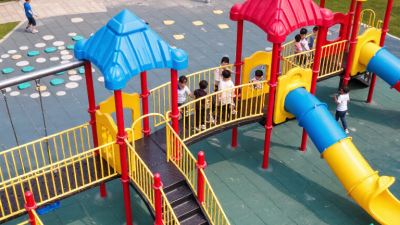
How to Choose a Play Set for Age, Space, and Developmental Needs

What Is the Best Type of Outdoor Play Set?

How to Choose a Play Set for Age, Space, and Developmental Needs

The best play set fits the child, not the catalog photo. For toddlers, choose low platforms, short slides, secure handrails, and enclosed climbing areas. Preschool children often benefit from small ladders, crawl tunnels, and imaginative play panels. Older children may need higher climbing challenges, swings, and space for cooperative games. The World Health Organization recommends at least 180 minutes of daily physical activity for children aged three to four. A play set should support varied movement, not just repeated sliding.

Measure the yard before shopping. Include the equipment footprint, access path, and recommended protective-surfacing zone. Leave room around swings for forward and backward travel. Check slope, drainage, shade, and visibility from the house. A set that fits tightly may still be unsafe. The U.S. Consumer Product Safety Commission reports about 200,000 annual emergency-department injuries linked to public playground equipment. Home equipment differs, but the safety lesson remains relevant. Falls deserve serious attention.

Development matters, too. Climbing can build balance and planning, while swinging may support body awareness and rhythm. Watch how your child actually plays. A cautious child may need gradual challenges, not a tall tower. An energetic child may outgrow a basic set quickly. No checklist is perfect. I would recheck bolts, surfaces, and changing abilities every season. Families sometimes buy for future growth and forget today’s confidence. A smaller, well-used set can be the better choice. Sources: WHO, Guidelines on Physical Activity, 2020; U.S. CPSC, Public Playground Safety Handbook.

What Is the Best Type of Outdoor Play Set? - How to Choose a Play Set for Age, Space, and Developmental Needs

Play Set Type Typical Age Range Recommended Play Area Typical Capacity Developmental Benefits Best For Important Considerations
Low Toddler Climber 18 months–5 years About 8 × 10 ft, including a clear area around the unit 1–3 children Balance, climbing, coordination, spatial awareness, and confidence Young children and small yards Choose low platforms, wide steps, secure handholds, and age-appropriate openings. Active adult supervision is essential for toddlers.
Compact Swing Set 2–8 years, depending on the seat and structure About 12 × 18 ft; allow additional clearance in front of and behind the swings 1–3 children Core strength, leg coordination, rhythm, balance, and vestibular development Families prioritizing swinging in a limited-to-medium yard Swing clearance should be planned carefully. A common safety-planning guideline is to provide a protective surfacing zone extending twice the height of the swing’s pivot point to the front and rear.
Climbing Dome or Geodesic Climber 5–12 years About 14 × 14 ft, with unobstructed space around the perimeter 2–6 children Upper-body strength, grip strength, planning, agility, and cooperative play Older children who enjoy open-ended physical challenges The fall height and climbing difficulty can be substantial. Use impact-absorbing surfacing and inspect joints, bolts, and handholds regularly.
Raised Fort with Slide 3–10 years About 16 × 20 ft, including slide exit and access routes 3–6 children Imaginative play, gross-motor skills, problem-solving, communication, and turn-taking Children who benefit from both active and pretend play Check platform height, guardrails, barriers, ladder design, slide exit clearance, and entrapment risks. The structure should be anchored according to its installation instructions.
Modular Play Set 3–12 years, when age-rated components are combined appropriately About 18 × 24 ft or more 4–8 children Strength, balance, creativity, social negotiation, persistence, and varied sensory experiences Growing families with adequate outdoor space and changing needs Select components that match the youngest user as well as older children. More features require more inspection, maintenance, and protective surfacing.
Balance and Stepping Course 3–10 years About 10 × 16 ft, depending on spacing between elements 1–4 children Dynamic balance, motor planning, focus, coordination, and controlled risk-taking Small yards, movement-focused play, and children who prefer quieter activities Use stable elements with rounded edges and vary the height gradually. Keep the route away from walls, fences, hard landscaping, and other equipment.
Inclusive Ground-Level Play Set 2–12 years, with components selected for individual abilities About 14 × 20 ft, with accessible approach routes 2–6 children Social interaction, sensory exploration, communication, coordination, and independent choice-making Children with varied mobility, sensory, communication, or developmental needs Look for firm, continuous routes; transfer platforms or ramps where appropriate; supportive seats; quiet zones; and equipment that allows different levels of participation.
Nature-Based Play Area 2–12 years About 12 × 18 ft or more, depending on logs, rocks, sand, and planting 2–8 children Creativity, sensory development, balance, fine-motor practice, problem-solving, and self-directed play Families seeking flexible, low-structure play and natural materials Use non-toxic materials, remove sharp edges, avoid poisonous plants, manage splinters and standing water, and provide clear boundaries around loose-fill materials.
Planning and safety notes: The area figures are practical planning estimates rather than universal requirements. Always follow the equipment manufacturer’s age, height, weight, installation, anchoring, and surfacing instructions. Keep play equipment away from traffic, pools, grills, overhead branches, and other hazards. A protective surfacing area commonly extends at least 6 feet around stationary equipment, while swing zones require additional front-and-rear clearance based on swing height.

Comparing Materials, Durability, and Weather Resistance

Choosing an outdoor play set requires more than comparing colors and price. Material choice affects durability, maintenance, and safety through every season.

Solid wood feels sturdy and blends naturally with a garden. Cedar and other naturally weather-resistant woods resist moisture better than untreated timber. However, wood can crack, fade, or develop rough edges when rain and sunlight repeat their work.

I once inspected a play set with strong posts but neglected ladder rungs. The structure looked safe from a distance. It was not. Smooth surfaces, sealed joints, and regular inspections matter.

Engineered wood may cost less, but exposed edges can swell after repeated wet weather.

Plastic play sets are lightweight and easy to clean.

High-quality, UV-resistant plastic usually handles rain without rust or splinters. Thin plastic may become brittle under intense sunlight, though. Dark colors can also become very hot during summer afternoons. Check the surface by hand before children play. A cooler shade structure helps.

Powder-coated steel offers impressive strength and resists insects and rot. Scratched coating can expose metal to moisture, allowing rust to spread around joints. Stainless or corrosion-resistant hardware performs better near coastal air.

Every set should have secure anchors and effective drainage. Snow, wind, and frozen ground can stress connections differently. Weather resistance is never permanent. Even the best material needs checking, cleaning, and occasional repair.

Evaluating Safety Features, Installation, and Maintenance

Choosing the best outdoor play set starts with safety, not appearance. Look for rounded edges, enclosed platforms, secure railings, and impact-absorbing ground cover. A fall onto bare soil can cause serious injury, even from a low platform. Check that openings are too narrow for a child’s head to pass through. Finger traps deserve attention too. Small details matter.

Installation quality often determines whether a play set remains stable. Place it on level ground, away from fences, branches, pools, and electrical lines. Anchor every support according to the instructions, then test the structure with careful pressure before children use it. I have seen families rush this stage, especially when the instructions seem simple. That shortcut can create movement, loose joints, and avoidable risk. Professional installation may be sensible on sloped or uneven yards.

Maintenance should become a routine, not an emergency task. Inspect bolts, connectors, swings, ropes, and plastic parts every few weeks. Look for rust, splinters, cracks, fading, and standing water after rain. Tighten loose hardware promptly, but do not over-tighten parts that need controlled movement. Replace damaged components rather than improvising repairs. Keep the surface clean and remove leaves that hide hazards. Children grow quickly, so recheck seat height, guardrails, and age suitability each season. No play set stays safe by itself.

What Is the Best Type of Outdoor Play Set?

Evaluating safety features, installation, and maintenance

Scores use a practical 1–5 scale, where 5 represents the most favorable balance of safety, installation simplicity, and maintenance requirements. Plastic play sets typically require less upkeep, while wooden sets offer strong customization but need regular inspection, sealing, and hardware checks. All play sets should be installed on protective surfacing and inspected regularly.

Matching the Best Play Set to Your Budget and Family Use

The best outdoor play set is not always the largest one. It should match your budget, yard, and family’s real habits. A compact swing-and-slide set may suit younger children and smaller spaces. A climbing tower offers more variety, but it usually costs more and needs deeper safety surfacing. The U.S. Consumer Product Safety Commission reports that falls cause about 79% of playground equipment injuries. That makes installation quality more important than decorative extras.

Think about daily use before buying. Two children who play outside every afternoon may justify a stronger frame, adjustable swings, and multiple activity zones. A family using the set only on weekends may prefer a simpler structure with lower maintenance costs. Check the equipment’s age range, weight limits, anchoring system, and replacement-part availability. The American Academy of Pediatrics recommends age-appropriate equipment and close supervision. These details are easy to overlook. I once considered height a sign of better value, but a tall platform can become wasted space when children outgrow it quickly. Budget estimates should also include delivery, assembly, protective surfacing, and annual inspections.

Tips: Measure the fall zone with a tape measure. Leave clear space around swings and slides. Choose impact-absorbing surfacing recommended by CPSC guidance. Watch children during the first few uses, then reassess the layout after one month. If the set feels too ambitious for your yard, it probably is.