+86-13901441113

Leave Your Message
-
CONTACT NUMBER
-
 CONTACT NUMBER
 -
 CONTACT NUMBER
Choosing the best Outdoor Playground Toys in 2026 means looking beyond bright colors and big promises. The right choices invite movement, imagination, and shared play while fitting the space and the children who use it. A low climbing frame, sturdy balance pods, or a simple water table can turn an ordinary afternoon into an active one. Small details matter.
Dr. Michael Yogman, a pediatrician and lead author of the American Academy of Pediatrics report on play, wrote, “Play is not frivolous: it enhances brain structure and function and promotes executive function.” That idea offers a useful lens for choosing outdoor toys. Look for equipment that lets children make choices, test coordination, and play together—not just repeat one action. Check age guidance, stable construction, weather-resistant materials, and clear maintenance instructions. Also consider shade, storage, and how much room children need to move safely.
This guide explores popular options, from swings and slides to nature-play kits and inclusive sensory equipment. It compares practical features, likely age ranges, and setup needs, with attention to everyday use rather than showroom appeal. No toy is perfect for every yard or group. A large playset may delight children but leave little room for running; a smaller toy may be used in more ways than expected. That trade-off deserves a second look.
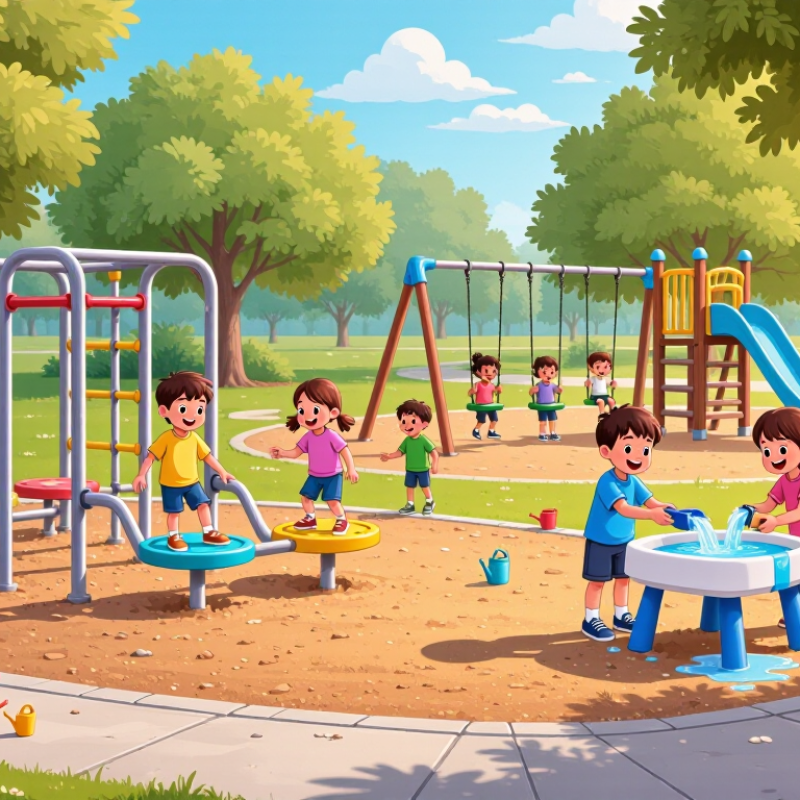
Outdoor playground toys do more than fill a yard. In 2026, their value lies in how they invite children to move, invent, and play together. A low balance beam can turn a few careful steps into a pretend river crossing. A ball can spark a simple game that changes with every player. Small details matter.
Good choices match children’s ages, abilities, and available space. Look for stable construction, smooth edges, and materials suited to outdoor weather. Check the play area, too: a toy that rolls toward a driveway or gets hidden in tall grass can create avoidable problems. Supervision still matters. No product removes every risk.
The best setup need not be elaborate. A few open-ended items, such as chalk, buckets, and soft balls, can support many kinds of play. Add options children can use in different ways, including seated or standing play where possible. Then watch what gets used, and what stays untouched. That part is easy to miss. Rotate toys, inspect them for cracks or loose parts, and ask children what they would change. Their ideas may be messier than an adult’s plan, but that can be useful.
| Playground Toy or Equipment | Typical Age Suitability | Play Value | Common Materials or Features | Important Safety Considerations |
|---|---|---|---|---|
| Freestanding swing | Varies by seat type; bucket-style seats are designed for younger children, while belt seats are for children who can sit independently. | Develops balance, coordination, and body awareness; offers rhythmic movement play. | Weather-resistant frame, secure hangers, and a seat suited to the child’s size and abilities. | Anchor the frame as directed, check the swing path for obstacles, and use impact-absorbing surfacing beneath and around the equipment. |
| Low climbing structure | Choose a structure labeled for the child’s age and ability; lower designs are generally more suitable for younger climbers. | Encourages strength, coordination, problem-solving, and confidence through graduated challenges. | May include climbing grips, steps, a short ladder, or a small platform; materials can include treated wood or outdoor-rated plastic and metal. | Check for stable anchoring, secure handholds, entrapment hazards, and a protective surface appropriate to the equipment’s fall height. |
| Playhouse or outdoor role-play set | Often suited to preschool and early school-age play; follow the product’s age guidance. | Supports imaginative play, communication, and cooperative games. | Typically has open doorways, rounded edges, and outdoor-rated panels; some sets include play counters or pretend windows. | Secure the structure against tipping, inspect openings and edges, and place it away from driveways, fences, and other hazards. |
| Sand and water play table | Commonly used by toddlers and preschoolers with close adult supervision. | Promotes sensory exploration, pouring, measuring, and early science concepts. | Usually a stable, washable table with separate or removable bins and simple scoops or cups. | Supervise children around water, empty and dry containers after use, and keep sand clean and covered when not in use. |
| Balance path or stepping stones | Suitable for a range of ages when height, spacing, and difficulty match the child’s abilities. | Builds balance, coordination, and motor planning; can be rearranged for different routes. | Low-profile pieces with stable, non-slip bases; outdoor-rated plastic or sealed wood are common options. | Use on a level surface, space pieces to suit the child, and check for slipping, sharp edges, or damage. |
| Outdoor balls and toss targets | Choose ball size and activity difficulty appropriate to the child’s age and abilities. | Encourages throwing, catching, aiming, turn-taking, and active group play. | Lightweight balls and stable, low targets are practical for casual outdoor games. | Play in a clear area away from roads, windows, and bystanders; avoid hard or heavy balls for young children. |
| Outdoor art easel or chalkboard | Most appropriate when writing tools and accessories are safe for the child’s age; supervise younger users. | Combines creative expression with outdoor play and supports drawing, early writing, and shared projects. | Look for a stable base, weather-resistant surfaces, and washable or outdoor-suitable materials. | Place on level ground, store small accessories safely, and use art materials according to their age labels. |
Selection note: The best choice depends on children’s ages and abilities, available space, supervision, and local safety requirements. Inspect equipment regularly and follow the manufacturer’s installation and maintenance instructions.