Top Garden Play Ideas for 2025 to Transform Your Outdoor Space
The concept of "Garden Play" has gained significant traction in recent years as families increasingly prioritize outdoor spaces for recreation and leisure. According to a recent report by the National Association of Landscape Professionals, nearly 70% of parents agree that outdoor play is essential for their children's physical and mental well-being. As we look ahead to 2025, innovative ideas for transforming gardens into vibrant play areas are emerging, allowing families to blend functionality with creativity in outdoor design.
Incorporating elements of play within gardens not only promotes healthy activity but also enhances social interaction among children and their peers. A study conducted by the American Academy of Pediatrics highlights that children who regularly engage in outdoor play exhibit improved focus, resilience, and emotional stability. This underscores the importance of thoughtful garden planning that prioritizes play opportunities, thereby contributing to overall childhood development.
As we explore top garden play ideas for the coming year, it becomes clear that these designs must cater to various age groups and interests. From sensory gardens that stimulate exploration to imaginative play zones that spark creativity, the possibilities are endless. By investing in these outdoor transformations, families can create inclusive spaces that encourage active lifestyles, foster connections, and nurture a love for nature—all essential components for a well-rounded upbringing.
Innovative Garden Play Ideas for Children in 2025
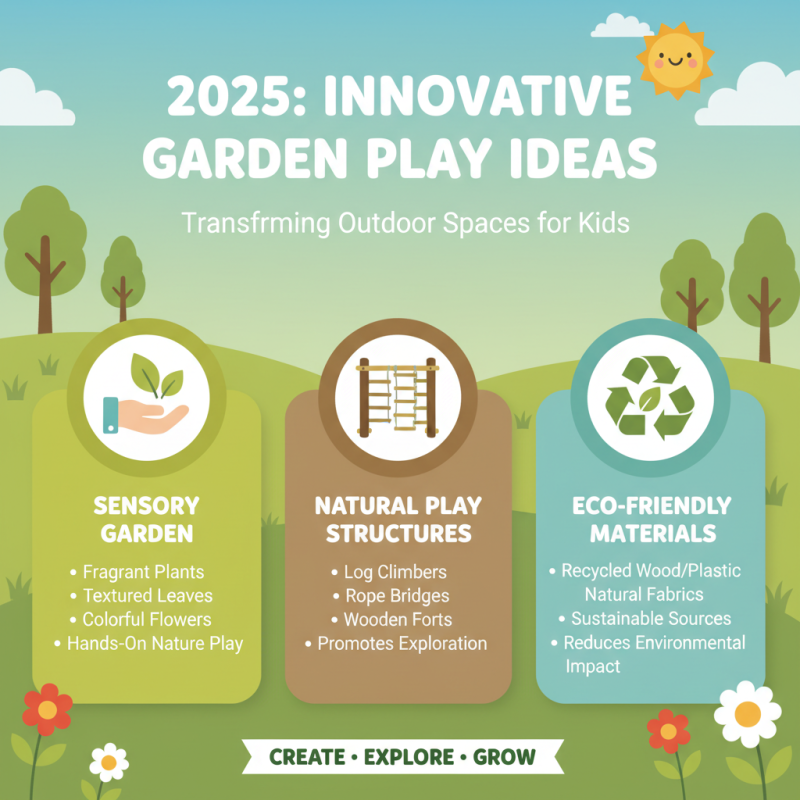
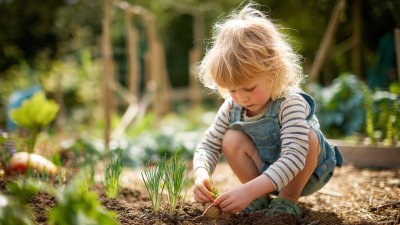
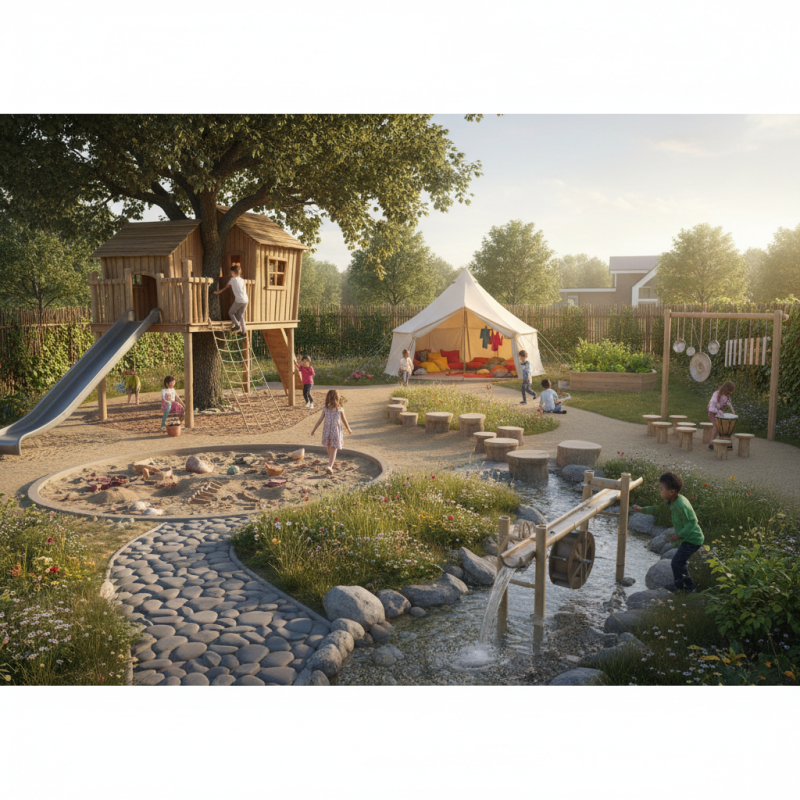
In 2025, transforming your outdoor space into a vibrant play area for children is easier than ever with innovative garden play ideas. Incorporating elements such as sensory gardens, natural play structures, and eco-friendly materials can create an engaging environment that promotes exploration and creativity. A sensory garden, filled with fragrant plants, textured leaves, and colorful flowers, not only stimulates children's senses but also encourages them to engage with nature in a hands-on manner.
Tips: When designing a sensory garden, consider including interactive elements like a small water feature or a digging patch where kids can discover different textures. Allowing children to help plant and care for the garden can foster a sense of responsibility and connection to the environment.
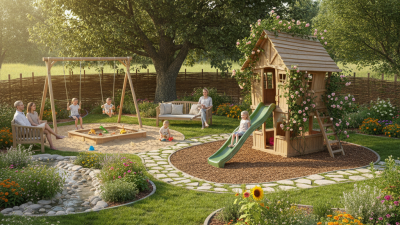
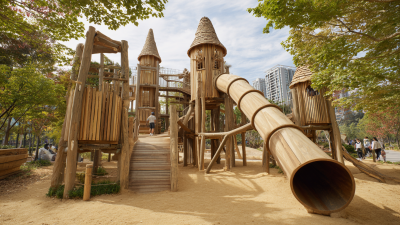
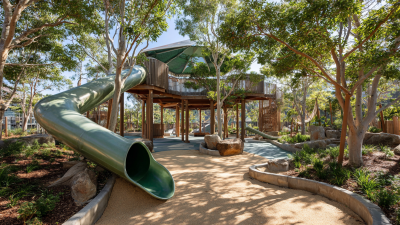
Additionally, natural play structures made from wood, stones, or ropes can create imaginative spaces for children to climb, swing, and explore. These structures blend seamlessly into the garden, encouraging physical activity while maintaining a connection to nature.
Tips: Ensure that any play structures constructed are safe and age-appropriate. You can also invite children to participate in customizing these structures, allowing them to express their creativity and make the space uniquely theirs.
Integrating Nature and Play: Sustainable Outdoor Play Spaces
As families increasingly prioritize outdoor activities, the importance of integrating nature into play spaces has never been more significant. Research from the National Recreation and Park Association (NRPA) indicates that children who engage with natural outdoor environments show improved cognitive functioning, creativity, and emotional well-being. This trend suggests that transforming gardens into sustainable play spaces not only promotes physical activity but also enhances mental health by fostering a connection with nature. Incorporating native plants and eco-friendly materials can create an immersive environment that encourages exploration and learning.
Furthermore, the 2022 Outdoor Participation Report from the Outdoor Industry Association unveils that 7 in 10 families prefer natural settings for their children's play. This preference highlights the trend towards sustainable designs that support biodiversity and ecological awareness. Parents are increasingly looking for play areas that include elements like tree stumps for balance challenges, native flower gardens for sensory experiences, and water features that attract wildlife. By investing in such designs, we not only provide a stimulating play environment but also teach children the values of environmental stewardship from a young age, equipping them to be mindful caretakers of our planet in the future.
Top Garden Play Ideas for 2025 to Transform Your Outdoor Space
| Play Idea |
Description |
Materials |
Sustainability Aspect |
| Natural Climbing Structures |
Build climbing areas using logs and rocks to encourage physical activity. |
Reclaimed wood, stones, natural rope |
Uses local and recyclable materials |
| Sensory Gardens |
Create a space filled with various textures, colors, and scents to stimulate the senses. |
Native plants, herbs, gravel paths |
Promotes biodiversity and conservation |
| Green Playhouses |
Interactive playhouses made from sustainable materials. |
Bamboo, recycled plastics, wood |
Utilizes renewable resources |
| Outdoor Art Stations |
Encourage creativity with designated spaces for painting and building. |
Upcycled materials, natural dyes |
Focused on reusing materials |
| Wildlife Observation Areas |
Create spaces to encourage butterflies, birds, and insects. |
Birdhouses, native plants, bee hotels |
Enhances local ecosystems |
Creative DIY Projects to Enhance Your Garden's Playability
In 2025, transforming outdoor spaces into interactive play areas has become a focal point for homeowners looking to enhance their gardens. Creative DIY projects not only improve playability but also foster family bonding and encourage outdoor activity. According to the National Recreation and Park Association, 78% of children are more likely to engage in outdoor activities when play spaces are available. This shift emphasizes the importance of designing gardens that cater to both aesthetics and functionality, making them engaging for all ages.
Emphasizing sustainable practices, DIY projects like building raised garden beds can integrate play with learning. These structures can serve as both a gardening space and a play area, where children learn about planting while having fun. Additionally, incorporating natural elements such as logs, boulders, and sand pits can offer versatile play opportunities. A study from the American Institute of Architects shows that nature-inspired play environments not only boost physical activity but also enhance creativity and problem-solving skills in children. By blending educational aspects with play, homeowners can create gardens that become vibrant hubs of activity and learning.
Safety Considerations for Designing Garden Play Areas
When designing garden play areas, safety should always be the top priority. According to the
Consumer Product Safety Commission (CPSC),
nearly 200,000 children are treated for playground-related injuries each year in the United States alone.
Designing a safe environment involves several key considerations, including choosing age-appropriate equipment,
ensuring proper surfacing materials, and adhering to local safety standards. For instance, the use of impact-absorbing surfaces like
rubber mulch or engineered wood fiber can significantly reduce the risk of injury from falls,
which account for approximately 70% of playground injuries.
Furthermore, a well-planned garden play area should provide clear sightlines for caregivers,
allowing them to monitor children’s activities without obstruction. The National Association for the Education of Young Children (NAEYC) emphasizes the importance of
active supervision, encouraging caregivers to be engaged and vigilant. Incorporating natural barriers, such as shrubs or fencing,
can also help delineate play areas while providing additional safety against unforeseen hazards. Overall, creating a secure and conducive
play space not only protects children but also promotes their physical and social development in an outdoor setting.
Incorporating Technology into Garden Play Experiences
In 2025, the integration of technology into garden play experiences promises to revolutionize how children and families enjoy outdoor spaces. Smart gadgets such as interactive gardening tools and augmented reality games can enhance the play experience by blending physical activity with digital engagement. By incorporating elements like virtual garden traverses or educational apps, families can encourage children to explore nature while learning about sustainability and plant biology.
**Tip:** Consider investing in solar-powered garden lights with interactive features that respond to children's movements. This adds a magical element to evening playtime, transforming the garden into an enchanting space for exploration.
Furthermore, the use of drones in garden play allows for fun aerial activities and educational opportunities. Kids can learn about technology while piloting drones to capture beautiful garden imagery or create scavenger hunts that involve locating garden treasures through guided navigation. This unique blend of play and learning fosters creativity and curiosity in children.
**Tip:** Set up a small garden zone designated for drone activities, ensuring children have a safe area to practice piloting and follow drone-guided challenges while stimulating teamwork and problem-solving skills.
 +86-13901441113

 CONTACT NUMBER
 CONTACT NUMBER