How to Choose the Best Outdoor Play Sets for Kids?
Choosing the best outdoor play sets for kids requires careful consideration. Parents want to ensure their children have safe, engaging spaces to play. Outdoor play sets are not just toys; they can significantly enhance a child's development.
When selecting outdoor play sets, it’s important to think about the age and interests of your child. Some sets include swings, slides, and climbing walls. Look for durable materials that withstand the weather. Safety features are also crucial. Check for smooth edges and sturdy construction.
While many options exist, the right choice often seems overwhelming. Personal experiences from other parents can provide valuable insights. Balanced research and practical feedback might lead you to the perfect set. Remember, outdoor play sets should foster creativity and physical activity. Taking your time is vital to ensuring you make the best decision for your child's needs.
Factors to Consider When Selecting Outdoor Play Sets for Kids
Choosing the right outdoor play set for kids involves considering several critical factors. Safety should be a top priority. According to the American Society for Testing and Materials (ASTM), all play equipment should meet specific safety standards. Look for sturdy materials such as high-quality wood or metal that can withstand the elements. Additionally, check for rounded edges and proper anchoring to prevent accidents.
When assessing play sets, consider the age range they are designed for. A recent study by the National Institute for Play indicates that tailored play experiences enhance physical development and social skills in children. For instance, younger children benefit from smaller, lower structures, while older kids enjoy more complex setups with slides and climbing walls. Ensure the play set includes age-appropriate features to promote active engagement.
Space is another essential factor. Measure your available yard area to accommodate swings, slides, and other components. The Consumer Product Safety Commission recommends a clear zone around play structures to minimize injury risks. Overcrowded backyards may lead to accidents. A thoughtful layout not only ensures safety but also maximizes enjoyment. Engage your kids in the decision, allowing them to express their preferences.
Different Types of Outdoor Play Sets and Their Features
Outdoor play sets offer a range of features tailored for children’s development. Swings, slides, and climbing structures enhance physical activity. According to the American Academy of Pediatrics, active play reduces childhood obesity rates. A varied playset encourages children to engage in different activities, nurturing their motor skills.
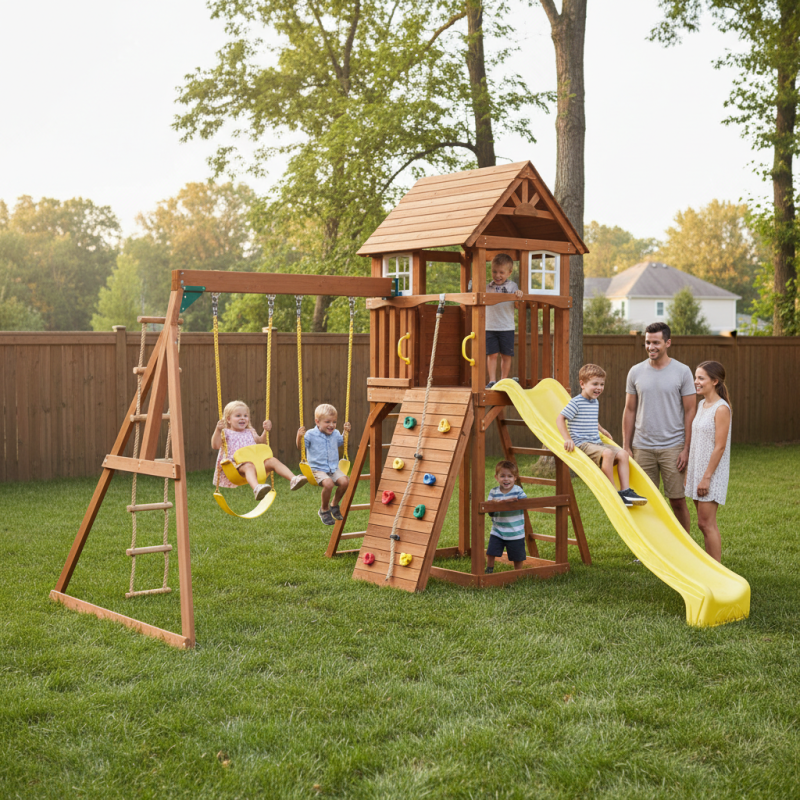
Wooden play sets are often more durable and visually appealing. They can provide a natural aesthetic ideal for outdoor spaces.
On the contrary, metal structures may be less costly but can become hot in sunlight. Additionally, plastic play sets tend to be lightweight, making them easier to move. However, their lifespan might be shorter than wooden or metal options.
Safety is paramount when choosing outdoor play sets. The U.S. Consumer Product Safety Commission reports that inadequate supervision during play can lead to injuries. Maintaining equipment is crucial. Regularly check for wear and tear to ensure safety. The selection process requires thoughtful consideration of material, features, and safety standards. Engaging children in the decision can also promote ownership, but parents must be cautious of trends that may not prioritize safety.
Safety Standards and Regulations for Outdoor Play Equipment
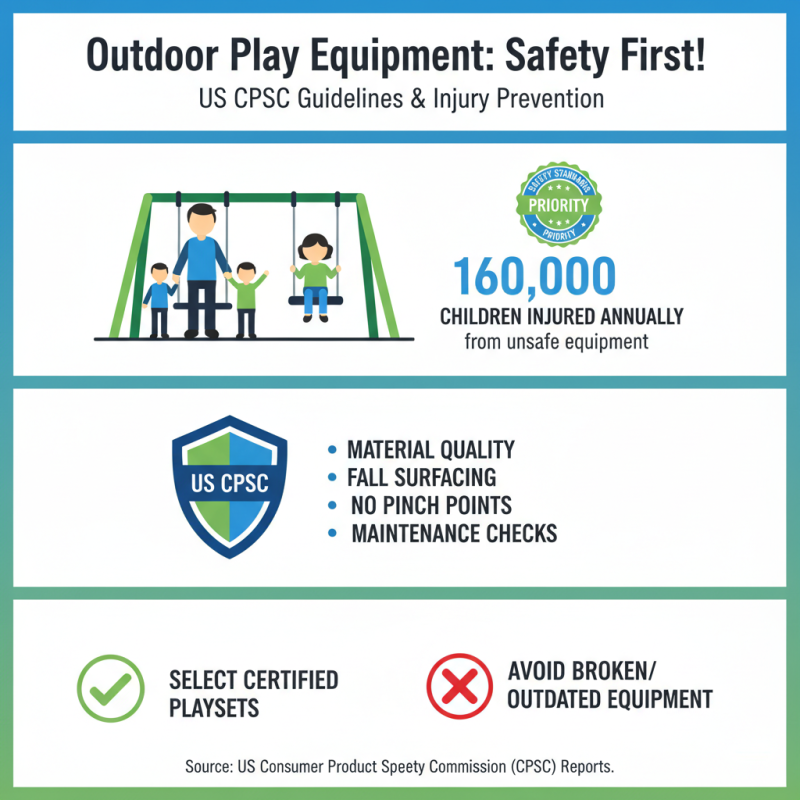
When selecting outdoor play sets for children, safety must be prioritized. The U.S. Consumer Product Safety Commission (CPSC) establishes guidelines to ensure children's safety. According to their reports, roughly 160,000 injuries occur each year due to faulty or unsafe play equipment.
To meet safety standards, manufacturers should adhere to ASTM International specifications. These include recommendations for maintenance and usage. For instance, equipment should have soft surfaces like mulch or rubber underneath it. This helps reduce injury risks. Sharp edges or small parts can pose risks, especially for younger children. Thorough knowledge of these regulations is crucial for parents as they evaluate their options.
Additionally, even compliant equipment can wear down over time. Regular inspections can help identify issues. Over time, wood may splinter, or rust may appear on metal components. Monitoring wear and understanding when repairs are needed is vital. Proper upkeep extends the lifespan of play sets and maintains safety standards. These elements are critical for creating a secure play environment.
Age Appropriateness: Choosing Play Sets for Different Developmental Stages
When selecting outdoor play sets, consider age appropriateness. Different developmental stages require different types of equipment. For toddlers, soft materials and low heights are crucial. They thrive on climbing and sliding but need safety. Look for features that encourage exploration. Simple swings and small slides are ideal for this age.
As children grow, their play needs change. Preschoolers enjoy more complex structures. They can handle higher slides and multi-level features. Look for sets that encourage imaginative play. Forts, tunnels, and climbing walls engage their creativity. However, not all older children prefer intense activities. Some may gravitate toward balance and coordination challenges.
It's essential to reflect on your child's individual interests and abilities. Not every child will be comfortable with all types of play sets. Some might fear heights or struggle with balance. Offering varied options allows children to explore their limits while encouraging growth. Prioritize safety and supervision to mitigate risks.
Age Appropriateness of Outdoor Play Sets for Kids
Budgeting Tips for Purchasing Outdoor Play Sets and Accessories
When budgeting for outdoor play sets, consider your priorities. Safety is paramount. According to the American Society for Testing and Materials, over 200,000 injuries occur yearly due to playground accidents.
Balance quality with price. Cheaper options may save money upfront, but could incur higher replacement costs. Research shows that families spend an average of $300 to $1,000 on a decent play set. Accessories, like swings or slides, add to this total. Set a clear budget, yet remain flexible. The right investment can last for years. Look for seasonal sales and discounts to maximize your budget.
Don’t forget maintenance costs. Wood requires staining or sealing. Metal can rust. Consider these ongoing expenses when planning. Engaging with local communities can provide insights. You may discover helpful tips or second-hand options.
Reflect on your choices to ensure they meet your family’s needs. Balancing fun and safety is crucial.
 +86-13901441113

 CONTACT NUMBER
 CONTACT NUMBER